
UPDATE: PRPA's Newly Revised Rawhide Gas Turbine Permit Still Raises Serious Clean Air Act Issues
Colorado regulators revised the Rawhide turbine permit after public scrutiny. But the updated analysis still relies on a fragile chain of assumptions about emissions, timing & coal plant retirement.

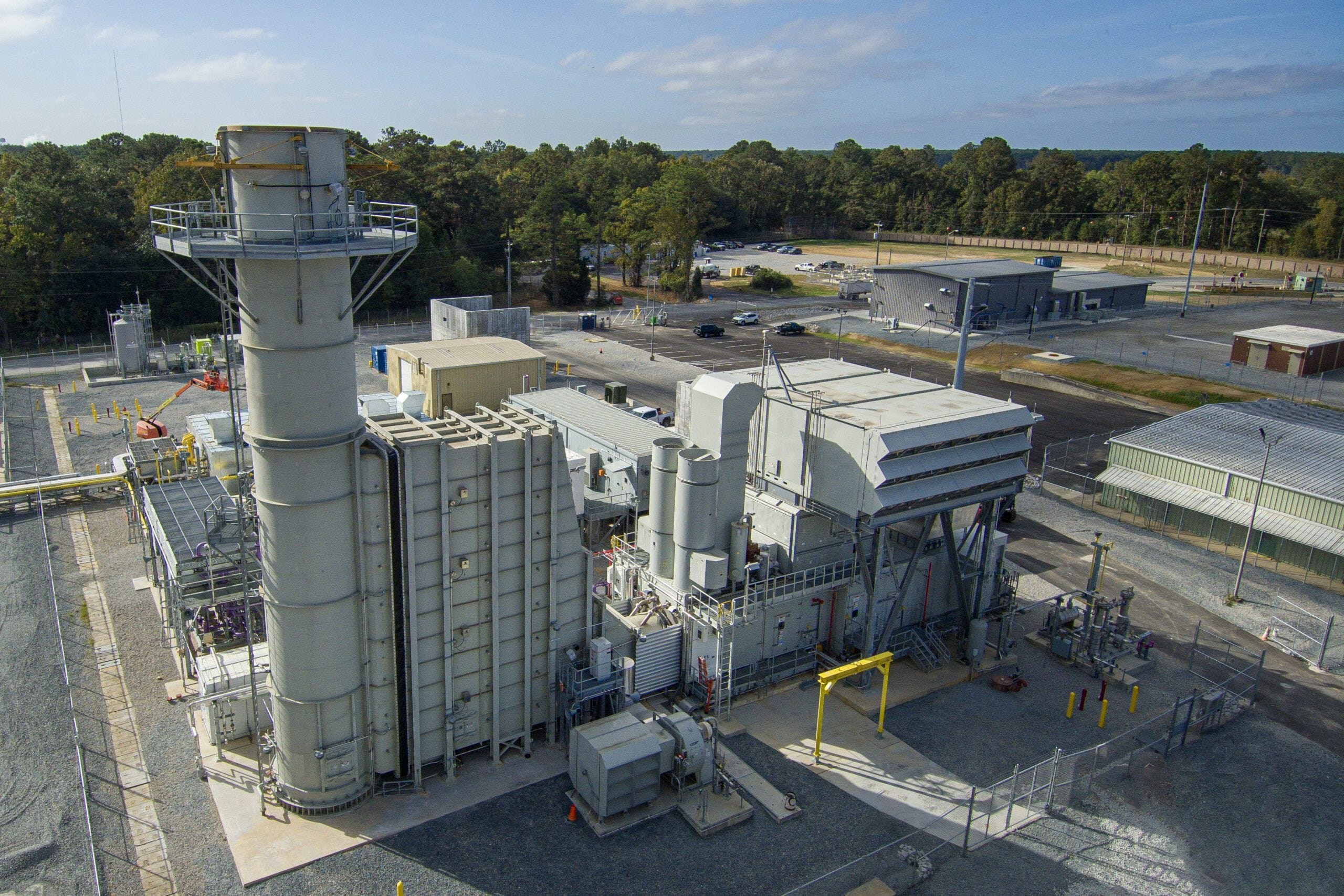
On March 13, 2026, Colorado’s Air Pollution Control Division (APCD) released a revised air pollution permit for the proposed 200 MW gas turbine project at the Rawhide Energy Station north of Fort Collins. The revision follows an earlier round of public comments that raised a number of significant technical and legal concerns about the project’s air quality analysis.
At first glance, the revision seems to address many of those concerns. But a closer look at the updated permit and supporting documents tells a more complicated story.
After reviewing the revised materials, it is clear that many of the serious questions raised in the first round of comments remain unresolved. In fact, the updated permit contains more than twenty structural problems in the way the project has been analyzed and permitted — ranging from the way emissions were calculated to how the project fits within the Clean Air Act’s major source permitting rules.
At the center of the debate is a simple question: Should this project undergo federal Prevention of Significant Deterioration (PSD) review?
PSD review is the Clean Air Act’s most rigorous permitting process for major new industrial emissions sources. When it applies, regulators must conduct deeper air quality analysis and require the use of the best available pollution control technology.
In the case of Rawhide, the state determined that PSD review is not required. The revised permit attempts to clarify how regulators reached that conclusion.
But the revised record also reveals something else: the state’s analysis depends on a chain of technical assumptions that remain open to interrogation.
Understanding those assumptions — and the problems they create — requires taking a closer look at how the Rawhide project was permitted in the first place.
In the sections below, we’ll walk through the major issues raised by the revised permit and explore why they matter for Northern Colorado’s air quality and energy future.
What the Rawhide Project Is
The permit at the center of this debate involves a proposed power generation project at the Rawhide Energy Station, a large electricity facility located north of Fort Collins and operated by the Platte River Power Authority (PRPA). PRPA is the municipally owned utility that supplies electricity to four Northern Colorado communities: Fort Collins, Longmont, Loveland, and Estes Park.
The proposal would add five GE LM6000 aeroderivative natural gas turbines at the Rawhide site. Together, the turbines would provide roughly 200 megawatts (MW) of generating capacity, supposedly intended to operate during periods of high electricity demand or when renewable generation is limited. Projects like this are often described as “peaking” or “reliability” resources because they can ramp up quickly when the grid needs additional power.
PRPA has framed the project as part of a broader transition away from coal. The Rawhide Energy Station currently includes Rawhide Unit 1, a 280 MW coal-fired power plant that has operated for decades and has historically been one of the region’s most significant stationary sources of air emissions. Under PRPA’s current planning framework, that coal unit is expected to retire by the end of 2030 as the utility moves toward a generation mix centered largely on solar, wind and gas.
The permitting analysis for the new gas turbines relies heavily on that expected retirement. Basically, APCD evaluated the project under the assumption that emissions from the turbines would be offset by the eventual shutdown of the coal plant. If the coal unit stops operating, the thinking goes, the cumulative emissions from the facility would decline even as new equipment is added.
That narrative — new gas turbines replacing an aging coal plant — is central to how the project has been presented to regulators and the public. But as the revised permit record shows, the regulatory analysis behind that narrative is more complicated than it first appears.
Taken together, the revised permit record reveals a pattern of unresolved issues that fall into several broad categories. Some relate to the core legal question of whether the project should undergo federal Prevention of Significant Deterioration (PSD) review. Others involve whether the operational assumptions used in the air quality analysis are actually enforceable under the permit. Additional concerns arise from the structure of the permit itself, the technical modeling used to evaluate emissions, and procedural questions about how key elements of the analysis were developed during the permitting process. Each of these areas contains multiple technical issues. Considered individually they may appear narrow or technical; considered together, they raise broader questions about whether the Rawhide turbines have been evaluated under the full level of scrutiny required for a project of this scale.
Category 1 — The PSD Applicability Problem
The most important issue raised by the revised permit involves a question at the center of federal air pollution law: whether the Rawhide turbine project should undergo Prevention of Significant Deterioration (PSD) review.
As explained above, PSD review is the Clean Air Act’s most rigorous permitting process for major industrial sources of air pollution. In simple terms, it applies when an existing major facility makes a change that significantly increases emissions. When PSD is triggered, the project must undergo a detailed air quality analysis and demonstrate the use of the Best Available Control Technology (BACT) for key pollutants. PSD review also typically involves more extensive public scrutiny, including a public hearing, and federal oversight.
The Rawhide Energy Station is already classified as a major stationary source under the Clean Air Act. That means any significant emissions increase from new equipment would normally trigger PSD review.
However, the permitting analysis for the new turbines attempts to avoid that outcome through a balancing calculation. In essence, regulators evaluated the project under the following logic:
New gas turbines → emissions increase

Coal plant retirement → larger emissions decrease
Because the emissions decrease from shutting down Rawhide Unit 1 offsets the emissions increase from the new turbines, APCD concludes, the project is able to proceed without PSD review. This type of balancing act is commonly referred to as “netting” in Clean Air Act permitting.
The revised permit makes clear that this logic remains central to the state’s analysis. The expected retirement of Rawhide Unit 1 is treated as the sole emissions decrease that allows the project to remain below the thresholds that would trigger PSD review.
However, several issues arise from relying on the coal plant retirement in this way.
First, the retirement of Rawhide Unit 1 is not federally enforceable within the Clean Air Act regulatory framework. The permit analysis assumes the coal plant will shut down, but that assumption has not been incorporated into the federally enforceable rules that typically govern emissions reductions used in PSD calculations.
Second, the netting analysis depends on a future event that has not yet occurred. The emissions decrease being used in the calculation exists only as an expected future change rather than an existing, enforceable reduction.
Third, the timing of the changes raises additional questions. The permit allows the new turbines to begin operating before the coal unit would shut down, creating a mismatch between when emissions increases occur and when the assumed decreases take place.
Fourth, the revised technical analysis acknowledges—but does not resolve—whether the coal plant retirement and the turbine installation should be treated as part of the same overall project under Clean Air Act rules. That question, known as project aggregation, can significantly affect how emissions changes are evaluated under PSD.
Finally, the revised analysis also introduced changes to the baseline emissions period used in the calculations. Baseline selection is one of the most sensitive elements in PSD determinations because it directly affects how emissions increases are measured.
Taken together, these issues mean that the PSD determination in the Rawhide permit rests on a chain of assumptions about future events, timing, and project structure. Whether those assumptions satisfy the Clean Air Act’s requirements for avoiding PSD review remains one of the most consequential questions raised by the revised permit.
Category 2 — Enforceability Problems
Another important set of issues in the revised permit involves a concept that is fundamental to air pollution permitting: enforceability.
When regulators evaluate a project’s emissions impacts, they typically rely on air quality modeling and emissions projections. These analyses often assume specific operating conditions — for example, how often equipment will run, how it will be dispatched, and what emission controls will be in place. Under the Clean Air Act permitting framework, those assumptions generally need to be reflected in enforceable permit limits. Otherwise, the analysis used to justify the permit may not match how the equipment actually operates once it is built.
In several places, the Rawhide permit appears to rely on operational assumptions that are not clearly reflected in enforceable permit conditions.
For example, the air quality modeling used to evaluate the turbines assumes certain operating patterns and duty cycles for the new equipment. These assumptions influence how emissions are estimated and how the project’s air quality impacts are assessed. However, the permit itself contains relatively few constraints that would require the turbines to operate in those specific patterns.
Similarly, the permit relies mainly on a combined annual operating hour cap for the five turbines rather than establishing limits on how individual units may operate. That approach leaves considerable flexibility in how the turbines could be dispatched in practice.
The permit also appears to leave some ambiguity in how operating hours are counted. Without clear accounting rules, different interpretations of turbine operation — particularly during short-duration starts, tests, or partial-hour operation — could affect how emissions accumulate over time.
These distinctions may seem technical, but they matter because air permits are meant to ensure that the emissions assumptions used in regulatory analysis are binding in practice. If the assumptions used in the modeling are not reflected in enforceable permit conditions, the emissions scenario analyzed during permitting may differ from real-world operation after the project is built.
For that reason, questions about enforceability are not simply procedural. They go to the heart of whether the emissions analysis used to justify the permit will actually govern how the facility operates in the future.
Category 3 — Structural Permit Design Issues
Some of the issues raised by the revised Rawhide permit are not about emissions calculations or air quality modeling at all. Instead, they involve how the permit itself is structured and how the project will be approved and verified over time.
Air pollution permits are not simply technical documents; they are also legal instruments that define how a facility may operate. Because of that, the structure of a permit can influence how reliably the emissions analysis used during the permitting process carries forward into real-world operation.
Several features of the Rawhide permit raise questions in this regard.
One example is the permit’s “initial approval versus final approval” structure. Under the draft permit, the issuance of the construction permit is treated as an initial approval that allows the project to be built and begin operating. Final approval, however, is only granted after the equipment has begun operating and the state has verified that it conforms to the permit conditions. This two-stage approach is not unusual in construction permits, but it can create uncertainty about whether the operating conditions assumed in the permit analysis will fully match the way the equipment ultimately runs.
A second feature of the permit is its reliance on representations provided by the applicant during the permitting process. Like many permits, the Rawhide permit states that the approval is based on information supplied by the project proponent. If later testing or operations reveal that those assumptions were inaccurate, the permit provides a pathway for modifying the permit to address those discrepancies.
That leads to a third structural issue: the permit explicitly allows for future modifications if the assumptions underlying the permit analysis prove incorrect. In practice, this means that some of the technical assumptions used to justify the permit may not be definitively resolved until after the turbines have begun operating.
Individually, these design features are not necessarily unusual. But taken together, they introduce a degree of uncertainty into the permitting framework. If the emissions analysis used to justify the permit depends on specific operational assumptions, and those assumptions are only confirmed after the project begins operating, there is a risk that the real-world emissions profile could differ from what was originally evaluated.
For large infrastructure projects like the Rawhide turbines, this raises an important question: does the permit structure ensure that the emissions scenario analyzed during permitting will actually govern how the facility operates once it is built?
Category 4 — Modeling and Technical Analysis Questions
Air pollution permits for large industrial projects rely heavily on air quality modeling and emissions projections. Before issuing a permit, regulators use these technical analyses to estimate how much pollution a project will emit and how those emissions might affect surrounding air quality. These calculations form the backbone of the permitting decision: they help determine whether the project complies with federal and state air quality standards and whether more stringent review requirements apply.
Because of this, the assumptions built into the modeling process are critically important. Small differences in how emissions are estimated, how equipment is expected to operate, or how historical emissions are measured can have significant effects on the outcome of the analysis.
In the case of the Rawhide turbines, several aspects of the modeling and technical analysis raised questions during the public comment process.
One issue involves startup and shutdown emissions. Gas turbines often emit higher levels of certain pollutants during these transitional phases than during steady operation. Accurately accounting for those periods can be important in estimating the project’s total emissions profile.
Another set of questions concerns turbine dispatch assumptions—that is, how frequently the turbines are expected to operate and under what conditions. Modeling typically relies on specific assumptions about when and how equipment will run, but those assumptions must reasonably reflect how the turbines will actually be used once they are installed.
Related to this are questions about duty cycle modeling, which describes how long turbines are expected to operate at different output levels. Changes in these operating patterns can affect both total emissions and how those emissions are distributed over time.
Finally, the analysis also depends on the baseline emissions used to measure changes at the facility. Baseline periods determine how much pollution the facility is considered to emit before the project, and they play a key role in determining whether the project results in a significant increase under Clean Air Act permitting rules. In the revised permit materials, the baseline period used in the calculations changed, which has implications for how emissions increases are evaluated.
Individually, each of these modeling choices may appear technical or narrow. But collectively they illustrate a broader point: the Rawhide permit relies on a series of modeling assumptions about how the turbines will operate and how emissions will be calculated. As with the other categories discussed above, the accuracy and enforceability of those assumptions ultimately determine whether the permit analysis reflects the project’s real-world environmental impact.
Category 5 — Administrative Record Questions
Beyond the technical modeling and legal issues discussed above, the revised Rawhide permit also raises a series of procedural questions about how the analysis evolved during the permitting process itself. These questions relate to what lawyers and regulators often call the administrative record — the body of documents, calculations, and explanations that agencies rely on when making a permitting decision.
In complex air permitting cases, the administrative record matters because it shows how regulators reached their conclusions. If key assumptions change during the review process, those changes typically need to be clearly explained so that the public and other stakeholders can understand how the final determination was reached.
Several aspects of the Rawhide permit record illustrate how elements of the analysis developed over time.
One example involves the baseline emissions period used in the calculations. In the revised permit materials, the baseline period used to measure emissions changes was updated. Because baseline selection directly affects whether a project is considered to significantly increase emissions under Clean Air Act rules, even relatively small changes to that period can alter the outcome of the analysis.
Another example concerns the question of project aggregation — whether the installation of the new gas turbines and the retirement of the coal plant should be treated as part of the same overall project for permitting purposes. The revised analysis acknowledges that this question exists but does not ultimately resolve it, leaving an important regulatory issue open.
The record also shows that the expected retirement of Rawhide Unit 1 plays a central role across multiple parts of the analysis, including the emissions calculations and the determination of whether the project triggers more stringent federal review. That reliance makes the timing and regulatory treatment of the coal plant shutdown particularly important to the overall permitting framework.
Finally, the differences between the original draft permit and the revised version demonstrate that key elements of the analysis changed during the public review process. Permit revisions in response to comments are not unusual, but they do highlight how the agency’s reasoning and technical assumptions can evolve as new questions are raised.
Taken together, these procedural developments suggest that the Rawhide permit was shaped through an iterative process in which important analytical choices were revisited and revised over time. For projects involving major energy infrastructure, that evolution in the administrative record can be just as significant as the technical details of the emissions analysis itself.
The Structural Problem Behind the Rawhide Permit
When you step back from the dozens of technical details in the Rawhide permit, one deeper pattern becomes visible. It’s the kind of pattern experienced Clean Air Act reviewers notice almost immediately.
The entire permitting framework depends on a chain of assumptions rather than a set of enforceable conditions.
In other words, the regulatory logic works only if several future events unfold exactly as expected. But the permit itself does not fully lock those expectations into binding requirements before the new turbines begin operating.
The structure looks something like this:
Coal plant retires as expected

↓

New turbines operate within modeled patterns

↓

Emissions occur in the sequence assumed in the analysis

↓

Total emissions remain below PSD thresholds
If every step in that chain plays out exactly as anticipated, the state’s conclusion—that the project does not trigger federal Prevention of Significant Deterioration (PSD) review—might ultimately prove correct.
But there’s a catch.
Each step in that sequence depends on future events or operational expectations, rather than conditions that are firmly fixed and enforceable at the time the permit is issued.
That’s why the various issues discussed in this article—although they appear in different technical categories—ultimately point to the same structural concern.
The PSD determination relies on several interconnected assumptions:
• the expected retirement of the coal plant
• the precise timing between emissions increases and emissions decreases
• turbine operating patterns used in the modeling analysis
• baseline emissions calculations that changed during the permitting process
• operational verification that occurs only after the turbines begin running
Any one of these elements might sound like a narrow technical issue. But taken together they create a permitting framework where the key regulatory conclusion—that PSD review is not required—depends on a set of assumptions that will only be confirmed later.
That’s a problem under the fundamental logic of the Clean Air Act. When regulators evaluate a project, they are generally expected to determine before construction whether the project will significantly increase emissions.
If the answer instead depends on how future events unfold, a natural question arises:
Was the project’s potential environmental impact fully evaluated at the time the permit was issued?
That question sits at the heart of the Rawhide permitting debate—and it helps explain why so many different technical issues ultimately converge on the same underlying concern.
Why This Matters for Northern Colorado
Although many of the issues discussed above may sound like technical disputes between engineers, regulators, and lawyers, the implications extend far beyond the permitting process itself.
Northern Colorado already faces persistent air quality challenges, particularly related to ground-level ozone pollution along the Front Range. The region has struggled for years to meet federal ozone standards, and industrial emissions—along with transportation and oil and gas activity—contribute to the complex mix of pollutants that drive those ozone levels.
At the same time, the Rawhide proposal represents a major infrastructure decision for the region’s energy system. The project would install five new gas turbines totaling 200 megawatts of generating capacity at the Rawhide Energy Station north of Fort Collins. Facilities like this are designed to operate for decades once built. And it’s slated to cost hundreds of millions of dollars and put Northern Colorado’s municipally owned utility (and ratepayers) under massive new loads of bond-issued debt.
In other words, this is not a short-term operational adjustment. It is a decision that will shape the region’s energy and emissions landscape for a generation, locking in a new piece of fossil-fuel infrastructure at one of Northern Colorado’s largest power plants.
That is precisely why the Clean Air Act contains special rules for major industrial projects. When emissions increases at a large facility cross certain thresholds, the law requires a more comprehensive process known as Prevention of Significant Deterioration (PSD) review. That process includes deeper analysis of emissions impacts and a requirement that the project apply the best available pollution control technology.
Seen in that light, the central question in the Rawhide permit debate is not simply whether new turbines should be built.
The real question is whether this project should undergo the full federal pollution review required for major industrial emissions sources before moving forward.
What Happens Next
The Rawhide permitting process is not finished yet.
Because the Air Pollution Control Division issued a revised draft permit, the project has now entered a new public comment period. During this time, community members, technical experts, and organizations can review the updated permit and submit written comments identifying concerns or requesting clarification.
Under Colorado’s air permitting rules, the Division must accept and consider written comments for 30 days after the date of the public notice. Comments can be submitted until April 12, 2026 using the following options:
• Submit comments via web form: Form for Public Comment on Draft Permit
• Submit comments via email: mailto:cdphe_apcd_airpermitcomments@state.co.us
• Submit comments via mail:
Air Pollution Control Division - Construction Permit Unit
Colorado Department of Public Health and Environment
4300 Cherry Creek Drive South, APCD-SS-B1
Denver, CO 80246-1530
This comment period exists for a crucial reason: it allows the public to weigh in before the permit becomes final.
And in the case of the Rawhide turbines, numerous important issues remain open. The revised permit analysis still raises questions about how emissions were calculated, how the project is structured, and how certain assumptions are reflected in enforceable permit conditions. These questions go to the heart of how the project was evaluated under state and federal air quality rules.
The regulatory process is therefore still unfolding.
Public comments submitted during this stage become part of the official administrative record, which regulators must review and respond to before issuing a final decision. In complex infrastructure cases, thoughtful comments can help clarify technical issues, highlight inconsistencies, and ensure that key questions are addressed before the project moves forward.
For residents of Northern Colorado, this means there is still an opportunity to participate in the decision-making process.
Air quality permitting may appear technical on the surface, but these decisions ultimately affect the long-term environmental and infrastructure landscape of the region. Public engagement is one of the ways communities help ensure that major projects receive the careful review they deserve.
Conclusion
The Rawhide turbine project now sits at a crossroads.
Regulators have issued a revised permit. The public comment period has reopened. And the technical and legal questions surrounding the project are still being debated.
Some of those questions are highly technical. Others are procedural. But taken together they point to a larger issue: whether the permitting process has fully addressed how this project will affect air quality in Northern Colorado.
Before we commit to another major piece of long-term fossil infrastructure, we need to ask: Has this project received the level of environmental review that federal law requires for major industrial emissions sources?